
Boosting Performance
A Simple Guide for HR and company leaders
This is a practical, research-based guide to help companies build modern performance management systems that truly drive results.
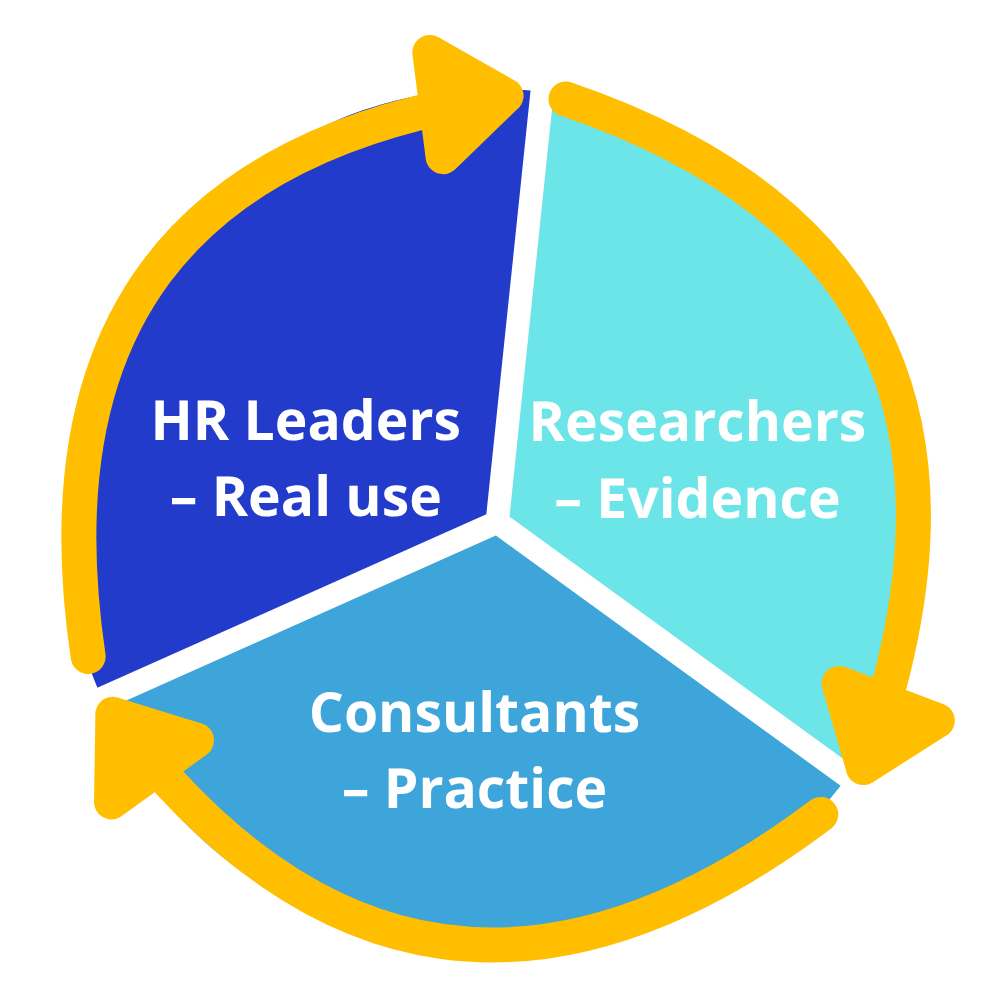
It is part of the Best HRM Solutions in V4 Countries project, where university researchers, consultants, and HR leaders work together to turn academic insights into tools that organisations of any size can use — even without external consultants.

We created it because:
- Too much online “advice” on performance management is not based on data.
- Many V4 companies still rely on outdated annual appraisals that drain energy.
- Leaders need something simple, credible, and proven.
Our goal: to make effective performance management understandable, doable, and sustainable for every organisation in Central Europe.
Success factors of a good performance management model
Research from more than 2 000 V4 organisations shows that performance management only works when it connects people, strategy, and culture.
The most successful systems are built on four factors:

1. Continuous Feedback:
Real-time coaching replaces annual reviews. Managers act as mentors, not judges.
2. Goal Alignment (OKRs):
Every goal ties directly to the company’s strategy, creating clarity and focus.
3. 360° and Fair Evaluation:
Feedback from peers, managers and self builds trust and balance.
4. Development Focus:
Every conversation ends with a growth plan, not just a rating.
Together, these elements turn performance management into a strategic engine that drives engagement, accountability, and growth.
Guideline for a better performance management system
You don’t need a large HR department or complex tools to start. Follow these simple steps and adjust them to your company’s culture.
Steps for a better performance management system
Step 1
Build commitment and clarity
Start with the “why.” Link your performance system to real business goals — growth, engagement, retention.
Step 2
Start small
Pick one pilot team for 3–6 months. Test, measure, and share wins.
Step 3
Train managers as coaches
Performance rises when leaders coach instead of control. Short, skills-based workshops work best.
Step 4
Keep feedback simple and frequent
Quarterly checkins, OKRs, and 1:1s are enough to build rhythm.
Step 5
Measure and adapt
Start with the “why.” Link your performance system to real business goals — growth, engagement, retention.
Typical results after 12 months
Quick-Start Toolkit
How to Begin Tomorrow
You don’t need a full transformation plan to start improving performance management.
This quick-start toolkit gives leaders a simple way to move from insight to action.

Begin small!
Stay consistent!
Learn as you go!
1. Assess where you are
Use this short checklist to understand your current maturity level. Tick what’s already true in your organisation:
- We have clear individual goals linked to strategy.
- Managers give feedback at least quarterly.
- Employees understand how their work supports company goals.
- 360° or peer feedback exists.
- Development goals are followed up regularly.
✅ 3–5 ticks: system in place — ready for optimisation.
✅ 1–2 ticks: start with a pilot team.
✅ 0 ticks: begin with OKRs and feedback basics.

2. Run a 3-month pilot
Choose one motivated team and follow this simple timeline:
Setup
Define team OKRs, train managers, communicate purpose
Practice
Hold monthly check-ins, collect feedback
Review
Evaluate results, plan next rollout
3. Use three basic tools
OKR Sheet:
align goals with strategy
Feedback Questions:
structure 1:1 conversations.
Review Summary Template:
capture insights and next steps.
4. Build confidence and scale
After the pilot:
Share stories from managers and teams.
Measure engagement, retention, and goal clarity.
Train more teams with the same rhythm.
Celebrate progress — culture shifts through visibility.
In a nutshell
Start small. Lead visibly. Learn fast.
Performance management changes not when you launch new forms – but when conversations about performance become real, frequent, and fair.
Reality show via a best practice
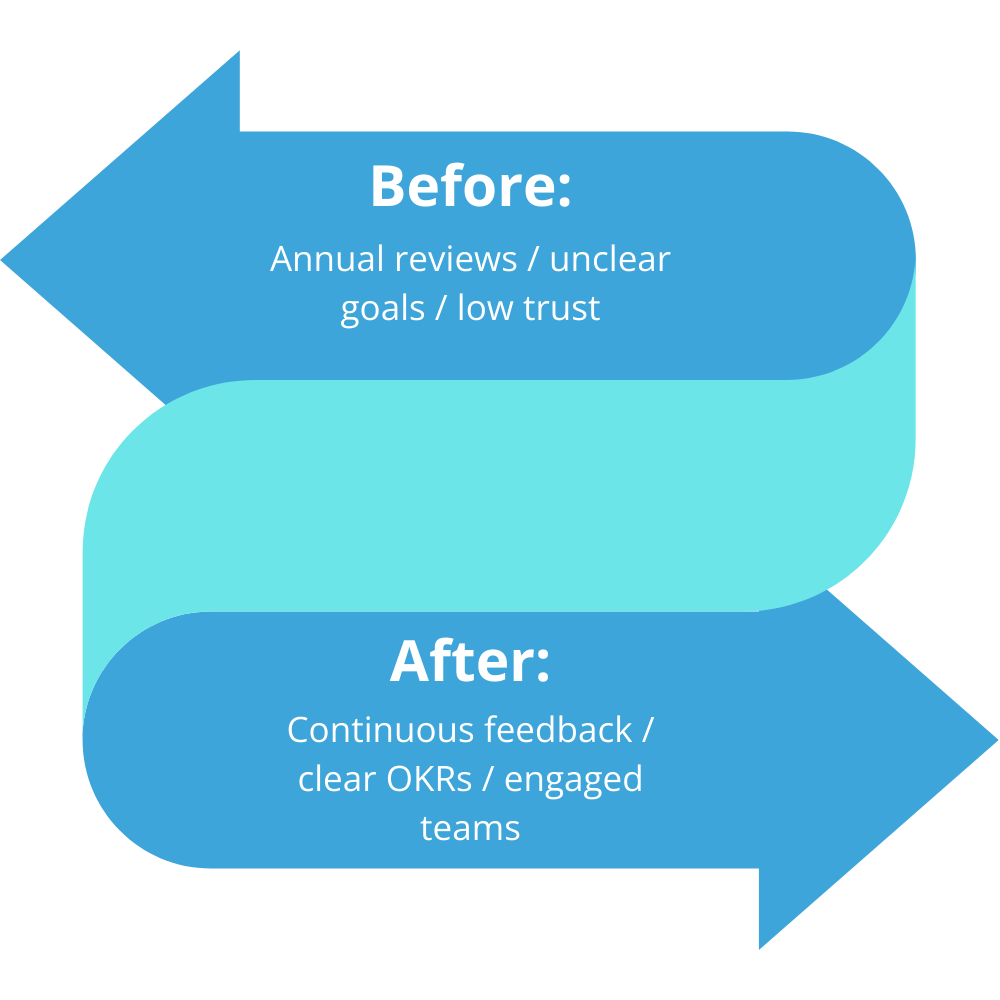
A mid-sized Central European company replaced its annual appraisals with continuous feedback and quarterly OKRs. Managers were trained as coaches, teams defined clear goals, and progress was tracked in short digital forms.
After one year:
- +15% employee engagement
- –10% voluntary turnover
- 95% high-performer retention
Technology helped, but leadership behaviour made the real difference. Once people experienced open, forward-looking feedback, performance management stopped being a chore and became a source of energy and trust.


Knowhouse Consulting Kft.
1141 Budapest
Tax number: 32350847-2-42, European VAT number: HU32350847
Privacy policy – Terms and conditions