Workshop for company executives, HR professionals, academics

HR 2026

challenges of labour market in Czech republic with focus on digitalization HR processes

January 28, 2026 (Wednesday), 8:45 a.m.–13:00 p.m.

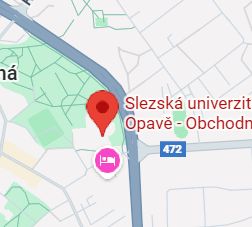
Location: Silesian University, School of Business Administration in Karviná (Univerzitní nám. 1934, 733 40 Karviná 1-Fryštát, Czechia), room A308

This workshop focuses on digitalisation in HR within the Czech labour market context and addresses the key challenges faced by Czech organisations in managing workforce changes, talent shortages and increasing demands for efficiency and transparency.

The event will be held in Czech.

Part of the V4 project Best HRM Solutions in V4 Countries, this workshop addresses key HR practices and challenges in the Czech Republic.

Our central question:

How can HR in Czech organisations use digitalisation to reduce administrative burden and strengthen its strategic role in managing talent and workforce challenges?

BACKGROUND OF THE EVENT

The workshop builds on the outcomes of the international project Best HRM Solutions in V4 Countries and responds to current challenges faced by HR functions in the Czech Republic. Czech organisations operate in a tightening labour market, under increasing pressure to improve productivity, manage talent shortages and respond to rapidly changing work roles. At the same time, HR is expected to deliver higher-quality services, ensure compliance and
contribute more directly to business performance.

The aim of the event is to provide a data- and evidence-based perspective on:

  • how research and project findings describe the current state of HR digitalisation in Czech organisations within the Central European context,
  • which areas of HR development will be most critical in the coming years (towards 2026),
  • and which concrete steps HR should prioritise if it aims to reduce administrative burden and strengthen its strategic role in influencing business processes and outcomes.

Research results and analytical insights will not be presented as isolated academic outputs, but synthesised into a coherent framework relevant for HR practice in the Czech Republic. These insights will serve as a common starting point for expert discussion, roundtable debates and interactive group work, where participants will further explore practical implications, challenges and opportunities for HR digitalisation in their own organisational contexts.

What are we working from?

The starting point of the workshop is the belief that effective HR development requires the integration of three perspectives: academic knowledge, organisational experience, and everyday human resources management practice. The workshop builds on the analysis of current challenges faced by organisations in the Czech Republic, as identified within the Best HRM Solutions in V4 Countries project.

These challenges include not only HR digitalisation, but also broader HR topics such as job design and job descriptions, competency frameworks, talent management, performance management, and the ability of HR systems to respond to changing labour market conditions.

Rather than offering ready-made solutions, the workshop focuses on critical reflection on existing HR practices and their adequacy to real organisational contexts in the Czech Republic. The emphasis is placed on understanding what works, where gaps exist, and which areas of HR development will become increasingly critical in the coming years.

The aim of the workshop is to connect academic insights, project research and practical HR experience in order to discuss and further develop practical HR models and approaches that are relevant for Czech organisations. These perspectives are brought together in an interactive four-hour workshop format, combining expert inputs with discussion and collaborative work.

Five key topics – and the related action opportunities

The discussions and small group work will focus on five major HR areas. The question for each topic is:
What can actually be achieved in an organization in 2026?

1. HR Digitalisation and AI in Czech Organisations

  • Which HR processes in Czech organisations have the greatest potential for
    digitalisation and automation (e.g. onboarding, recruitment administration,
    employee communication)?
  • How can AI and automation be used in HR in a responsible, transparent and GDPR compliant way within the Czech legal framework?
  • Where does technology genuinely support HR work, and where does it only create the illusion of efficiency?
  • How can digitalisation support sustainability goals (e.g. reduction of administrative waste, paperless HR)?

2. Talent Management and Development under Czech Labour Market Conditions

  • How should “talent” be defined in Czech organisations facing labour shortages and skills gaps?
  • How can talent development be designed in organisations with limited resources and capacity, which is typical for many Czech SMEs?
  • How can talent development be better linked to real business needs rather than isolated HR programmes?
  • How can digital tools support fair, inclusive and sustainable talent development?

3. Redefining Job Descriptions, Roles and Competencies

  • Why are traditional job descriptions increasingly ineffective in Czech organisations?
  • How should work roles be designed in conditions of digitalisation, changing
    technologies and flexible forms of work?
  • How can competencies, tasks and responsibility be integrated into modern role definitions?
  • How can job and role design support adaptability, reskilling and long-term
    employability?

4. Performance Management and Appraisal Systems in Practice

  • Why do performance appraisal systems often fail to deliver value in Czech organisations?
  • How can performance management be designed to support development, learning and engagement rather than only control?
  • Which performance management approaches work well in smaller and mid-sized Czech organisations?
  • How can performance management support sustainable performance and prevent burnout?

5. Employer Branding, Employee Experience and Retention

  • How can a credible employer brand be built in the Czech labour market, where employees increasingly value authenticity and work-life balance?
  • How can employer branding be connected to real employee experience, not just external communication?
  • How can organisations measure the impact of employer branding beyond the number of applicants?
  • How can sustainability, organisational values and responsible HR practices strengthen employer attractiveness?

Who is the event for?

People managing teams and employees

Students and doctoral candidates in HR- and management-related fields

People starting their careers in HR

Researchers dealing with HR-related topics

HR consultants and trainers supporting organizational development

Company representatives interested in developing HR practices

Program

09:00-09:15

Welcoming the participants and introducing the project: HR in the V4 region.

09:15-09:30

Digitalization in Czech Republic 

Ing. Helena Marková, Ph.D.

Ing. Lucie Reczková

Ing. Sampras Femi Robert

09:30-10:00

Gamification – a new trend in recruitment and performance management – Dana Chlupová

10:00-10:30

School for Practice – How to Work with Learning Outcomes – Ing. Lukáš Zajíček, MBA.

A discussion on how schools should prepare graduates for professional practice.

10:30–11:00

Coffee break, informal conversation

11:00-12:30

5 topics – 5 focal points in HR

In each area, work around research questions; areas selected by participants.

1. HR Digitalisation and AI

2. Talent Management and Development

3. Job Descriptions, Roles and Competencies

4. Performance Management in Practice

5. Employer Branding and Employee Experience

12:30-12:50

Sharing small group results in plenary session

A shared vision of

  • which HR measures can have the greatest business impact,
  • and how to prioritize them for 2026.

12:50–13:00

Closing remarks and lessons learned

Summary of key findings and identification of participants’ own first steps to be taken.

Cooperative partners

Main organizer and implementer of the conference and research:

letöltés (4)
logo-umb6-en

Supporter of the Best HR Practices in V4 countries project

Terms and conditions of participation and registration

TERMS AND CONDITIONS OF PARTICIPATION

The event is free of charge, but registration is required.

The event is organized within the framework of the Best HR Practices in V4 countries project with the support of the Visegrad Fund.

For questions regarding the event, please contact:

Helena Marková

markova@opf.slu.cz

tel. +420 728 306 879